Water heater problems: a homeowner's guide
Short answer
Most water heater problems come down to five things: no power or gas reaching the burner or elements, sediment in the tank, a failing thermostat or element, a leaking valve or fitting, or a tank that has reached the end of its life.
In this guide
A water heater usually gives warning signs long before it fails completely. Lukewarm showers, popping sounds, rusty water or a small puddle each point to a different cause, and most of them can be narrowed down in a few minutes.
Use this guide to match what you are seeing to its most likely cause. Each section links to a detailed walkthrough.
No hot water at all
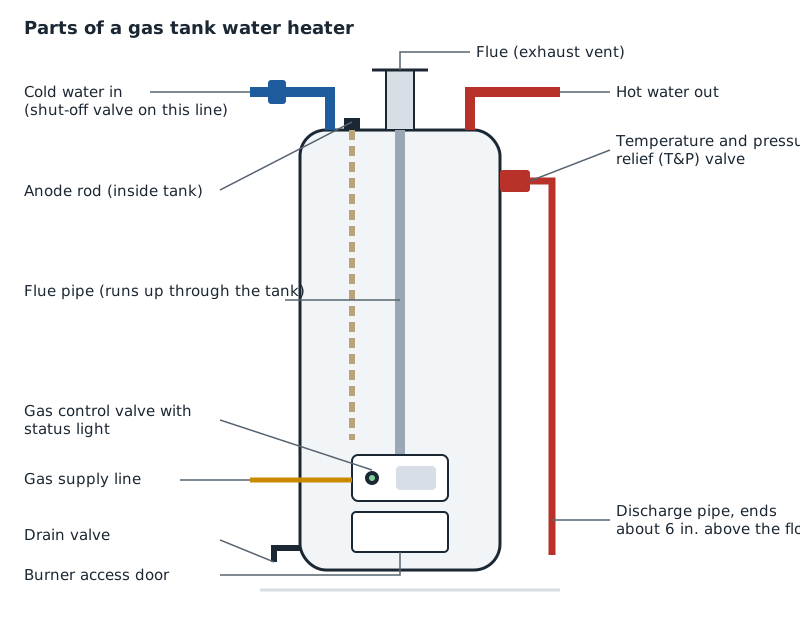
On a gas unit, check that the pilot is lit or that the status light is not flashing an error. On an electric unit, check the breaker and the reset button above the upper thermostat. If your unit shows a code, look it up in our error code guides by brand.
Water is warm but not hot
A thermostat set too low, a failed lower element on an electric tank, or a heavy layer of sediment are the usual causes. A broken dip tube, which lets cold water mix with the hot at the top of the tank, is less common but easy to miss.
Water heater is leaking
Where the water is coming from matters more than how much. A drip from the relief valve discharge tube, a loose drain valve and condensation can all be fixed. Water coming from the tank itself cannot. See our guide to a water heater leaking from the bottom.
Popping or rumbling noises
Sediment on the bottom of the tank traps water that boils and pops as the burner fires. Flushing the tank often helps. If the noise continues after a flush on an older tank, it is a sign the tank is wearing out.
Repair or replace?
A repair usually makes sense when the tank is under about eight years old and the problem is a part: a thermostat, element, valve or igniter. Once the tank itself leaks, or it is past its expected lifespan, replacement is the better use of money. Our guide to how long water heaters last covers the warning signs.
Common questions
Why did my water heater suddenly stop working?
On gas units the most common causes are a pilot or igniter fault, a gas supply issue or a tripped safety switch. On electric units, check the breaker and the high-limit reset button first.
Is it safe to reset a water heater myself?
Pressing the reset button on an electric unit or relighting a pilot by following the label instructions is generally safe. If the reset trips again, or you smell gas, stop and call a licensed plumber.
Was this article helpful?
Sorry about that. What was missing?
Please do not include personal information. Links are not accepted.
Thanks for your feedback. It helps us improve our guides.
More in Water heaters
- Water heater leaking from the bottom: causes and what to do
- How old is my Bradford White water heater? Reading the serial number
- How old is my A. O. Smith water heater? Reading the serial number
- How old is my Rheem water heater? Reading the serial number
- Water heater leaking from the top: causes and fixes
- Water heater making popping noises: causes and fixes
- Hot water smells like rotten eggs: causes and fixes
- How to flush a water heater