Plumbing emergencies: what to do first
Short answer
In most plumbing emergencies, the first move is the same: stop the water. Close the fixture shut-off valve if there is one, or the main water shut-off valve for the house. If water is near outlets or appliances, turn off power to that area. If you smell gas, leave and call the gas utility from outside.
In this guide
Plumbing emergencies feel chaotic, but the first few minutes follow a simple order: stop the water, make the area safe, limit the damage, then call for help if you need it.
Knowing where your shut-off valves are before anything goes wrong is the single most useful thing you can do.
If you smell gas, do not touch light switches or appliances. Leave the building and call your gas utility or 911 from outside.
Step 1: Stop the water
If the problem is at one fixture, use its own shut-off valve: under the sink, behind the toilet, or on the water heater's cold supply line. Turn clockwise to close.
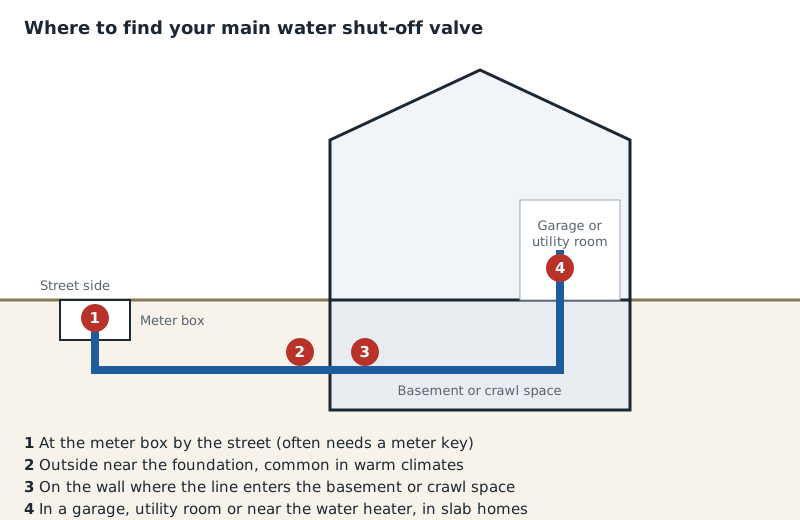
If you cannot find a local valve, or the leak is in a pipe, close the main water shut-off valve. It is usually where the water line enters the house: in a basement, crawl space, garage, utility closet or, in warm climates, outside near the foundation. Some homes only have a valve at the meter box by the street.
Step 2: Make it safe
- If water is near outlets, cords or appliances, turn off power to that area at the breaker panel, but only if you can reach the panel without standing in water.
- For a leaking water heater, turn off the power (electric) or set the gas control to off or pilot (gas).
- Keep children and pets away from hot water and wet floors.
Step 3: Limit the damage
- Open a faucet on the lowest floor to drain water out of the pipes once the main is off.
- Move furniture, rugs and electronics out of the wet area.
- Soak up standing water with towels, a mop or a wet vacuum.
- Take photos and video for your insurance claim before you clean up too much.
Step 4: Decide who to call
| Situation | Who to call |
|---|---|
| Gas smell | Gas utility or 911, from outside |
| Burst pipe, water still flowing after the main is off | Emergency plumber; the leak may be on the street side of your valve |
| Sewage coming up through drains | Plumber; stop using water in the house |
| Water stopped, damage contained | A plumber during regular hours is often fine |
| Large amount of water in walls or ceilings | A plumber and a water damage restoration company |
Get ready before an emergency happens
- Find and label your main water shut-off valve and test that it turns.
- Know where your breaker panel and gas meter shut-off are.
- Keep a flashlight, towels, a bucket and a basic pipe repair clamp or tape where you can find them.
- Save the number of a local plumber before you need one.
Common questions
Should I call an emergency plumber or wait until morning?
If you have stopped the water and the damage is contained, waiting for regular hours usually saves money. Call right away if water keeps flowing, sewage is backing up, or you have no water or heat in freezing weather.
Where is my main water shut-off valve?
Usually where the water line enters the house, such as a basement wall, crawl space, garage or utility closet. In warm climates it may be outside near the foundation, and some homes rely on the valve in the meter box.
Was this article helpful?
Sorry about that. What was missing?
Please do not include personal information. Links are not accepted.
Thanks for your feedback. It helps us improve our guides.