Water heater anode rod replacement cost (2026)
Short answer
Replacing a water heater anode rod typically costs about $150 to $350 with a plumber in 2026. The rod itself usually costs $25 to $50, so doing it yourself costs far less if you can break the old rod loose. Powered anodes cost more. On a tank already leaking or rusting through, a new rod will not save it.
In this guide
The anode rod is the cheapest part that most directly decides how long a tank water heater lasts. It corrodes so the steel tank does not. Replacing it on time is one of the best-value repairs in plumbing.
Figures are 2026 national estimates compiled from published cost guides such as HomeGuide, Angi and HomeAdvisor. Labor rates in high-cost metro areas often run above these ranges.
Typical costs
| Item | Typical 2026 cost |
|---|---|
| Standard magnesium or aluminum rod (part only) | About $25 to $50 |
| Plumber replacement, part and labor | About $150 to $350 |
| Powered anode rod (part only) | Often $150 or more |
| Flexible rod for low ceilings (part only) | Similar to a standard rod or a little more |
| Tank flush added to the visit | About $75 to $250 |
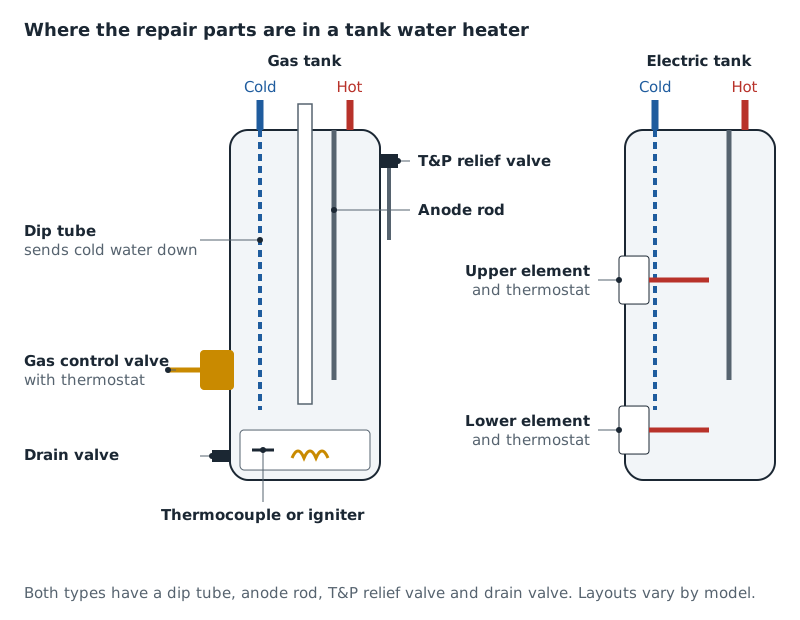
Why the price varies
- A stuck rod. Anode rods are installed tight and corrode in place. Breaking one loose can take a large breaker bar and time.
- Headroom. A rigid rod needs clear space above the tank. With a low ceiling, the plumber uses a flexible, segmented rod.
- Rod type. Magnesium, aluminum-zinc and powered anodes cost different amounts.
- Adding a flush. Many plumbers flush sediment while the tank is partly drained. Bundling saves a second visit.
When to replace it
Angi recommends replacing the anode rod at least every five years, and softened or aggressive water can use one up faster. Check it every few years: replace it when much of the rod is gone and the steel core wire shows. A rotten egg smell from the hot water is another common reason to switch rod types.
DIY or pro?
Many homeowners do it themselves: turn off the gas or power, shut the cold supply, relieve pressure, drain a few gallons and unscrew the old rod with a large socket. Our guide to the water heater anode rod walks through the steps. Call a plumber if the rod will not budge, because forcing it can damage the tank fitting.
When it is not worth it
If the tank already leaks, or the hot water is rusty and the heater is old, the tank is likely corroding. A new rod will not reverse that. Put the money toward a new heater instead; see our water heater replacement cost guide.
Not sure how old your heater is? The serial number tells you. See our guides for Rheem, A. O. Smith and Bradford White, and use our repair or replace water heater calculator to see how age changes the math.
Which rod to buy
| Rod type | Best for | Trade-off |
|---|---|---|
| Magnesium | Most municipal water; strongest protection | Wears fastest; can worsen rotten egg smell |
| Aluminum-zinc | Hot water that smells like rotten eggs | Slightly less protective in soft water |
| Powered anode | Softened water or persistent odor | Costs more; needs an outlet |
| Flexible (segmented) | Tanks with little headroom above | Same metals, easier to install |
Match the thread size and length to your heater. Many residential rods use a 3/4-inch thread with a 1-1/16-inch hex head, but check the heater's manual or the old rod before buying.
What happens if you skip it
Once the anode is used up, water starts attacking the steel tank wherever the glass lining has tiny gaps. Rust-colored hot water, a metallic taste and, eventually, a leak from the tank follow. At that point, the only fix is replacement, which costs many times more than a rod. Checking the rod at the same time as a yearly flush is the cheapest insurance a tank water heater can get.
A combined visit saves money
Because the tank must be partly drained anyway, ask for the anode check, a flush and a relief valve test on the same visit. Many plumbers price this as a maintenance call rather than three separate jobs.
Getting a fair price
- Ask for a flat price that includes the part, labor and the service call.
- Ask the technician to show you the reading or the failed part that proves the diagnosis.
- Check the heater's age from the serial number. A repair on a heater past about ten years deserves a second look.
- Check the warranty first. Parts are often covered longer than labor.
Common questions
How often should an anode rod be replaced?
Angi recommends at least every five years. Check it every few years and replace it sooner with softened or aggressive water.
Can I replace an anode rod myself?
Yes, if you can break the old one loose. You need a large socket, a breaker bar, thread sealant tape and enough headroom or a flexible rod.
Does a new anode rod make a water heater last longer?
Replacing it before it is used up helps protect the tank from corrosion, which can extend its life.
Was this article helpful?
Sorry about that. What was missing?
Please do not include personal information. Links are not accepted.
Thanks for your feedback. It helps us improve our guides.
More in Plumbing costs
- Plumbing costs: what drives the price of a repair (start here)
- Water heater element replacement cost
- Gas line installation cost (2026)
- Water heater expansion tank installation cost (2026)
- Water softener installation cost (2026)
- Well pump replacement cost (2026)
- Sump pump repair cost (2026)
- Water heater maintenance cost: tank and tankless (2026)
- Tankless water heater repair cost (2026)