Water heater pressure relief valve replacement cost (2026)
Short answer
Replacing a water heater temperature and pressure (T&P) relief valve typically costs about $20 to $200 according to HomeAdvisor, and HomeGuide puts the part alone at $10 to $25. Most of a professional bill is labor. A valve that drips or discharges should be replaced, and the cause, often high pressure or overheating, must be found.
In this guide
The temperature and pressure relief valve is the most important safety device on a tank water heater. It opens if the tank gets too hot or the pressure too high, and a pipe carries the discharge toward the floor or outside.
Figures are 2026 national estimates compiled from published cost guides such as HomeGuide, Angi and HomeAdvisor. Labor rates in high-cost metro areas often run above these ranges.
Typical costs
| Item | Typical 2026 cost |
|---|---|
| T&P valve part (HomeGuide) | About $10 to $25 |
| Replacement including labor (HomeAdvisor) | About $20 to $200 |
| Expansion tank, if pressure is the cause | About $150 to $450 installed |
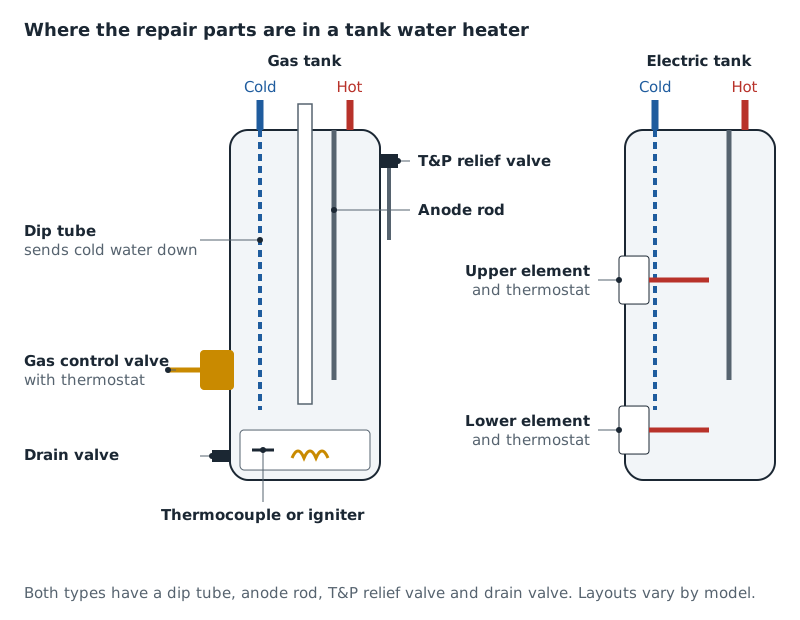
A dripping valve is a symptom
A relief valve that drips or discharges is doing its job or has worn out. Replace the valve, but also find out why it opened:
- Thermal expansion in a closed plumbing system. The usual fix is an expansion tank; see our water heater expansion tank installation cost guide.
- High water pressure from the street, which may need a pressure-reducing valve.
- Overheating from a failed thermostat or gas control.
- A worn valve seat or debris after testing the valve.
Never plug, cap or remove a relief valve to stop a drip. Without it, an overheated tank can fail violently.
DIY or pro?
Handy homeowners sometimes replace the valve: turn off the heat source and cold supply, relieve pressure, drain some water, and install a valve with the same temperature and pressure rating listed on the heater's label. Because it is a safety device, many people prefer a plumber, who can also check pressure and expansion.
Not sure how old your heater is? The serial number tells you. See our guides for Rheem, A. O. Smith and Bradford White, and use our repair or replace water heater calculator to see how age changes the math.
How to test a relief valve
- Place a bucket under the discharge pipe.
- Lift the test lever briefly. Hot water should flow out, then stop when you release it.
- If nothing comes out, or it keeps dripping afterward, the valve should be replaced.
The discharged water is scalding. Keep hands and feet away from the pipe outlet.
Valves that are rarely tested can stick after testing because mineral deposits disturb the seat, so be ready for a drip afterward on older valves.
The discharge pipe
Codes require a discharge pipe from the valve that runs down toward the floor, a drain or outside, without a valve, cap or reduction in size. If yours is missing or ends high on the wall, have a plumber correct it.
Check your water pressure
A simple pressure gauge that screws onto an outdoor faucet costs little and shows your home's water pressure. Readings that are very high, or that climb when the water heater runs, point to a pressure-reducing valve or expansion tank problem that should be fixed along with the relief valve.
Getting a fair price
- Ask for a flat price that includes the part, labor and the service call.
- Ask the technician to show you the reading or the failed part that proves the diagnosis.
- Check the heater's age from the serial number. A repair on a heater past about ten years deserves a second look.
- Check the warranty first. Parts are often covered longer than labor.
Common questions
Is a leaking pressure relief valve dangerous?
The leak itself is usually a sign the valve is working or worn. The danger is ignoring the cause or blocking the valve.
How often should a T&P valve be tested?
Many manufacturers suggest testing it periodically by lifting the lever briefly. Follow your heater's manual.
Was this article helpful?
Sorry about that. What was missing?
Please do not include personal information. Links are not accepted.
Thanks for your feedback. It helps us improve our guides.
More in Plumbing costs
- Plumbing costs: what drives the price of a repair (start here)
- Leak detection system cost
- Faucet installation cost
- Tankless water heater flame sensor replacement
- Water heater igniter replacement cost (2026)
- Water heater dip tube replacement cost (2026)
- Tankless water heater flow sensor replacement: cost and signs
- Tankless heat exchanger replacement cost (2026)
- Water heater gas valve replacement cost (2026)